
Search South Carolina Traffic Court Records
South Carolina traffic court records are public documents maintained through the state's summary court system. Magistrate courts and municipal courts handle traffic violations across all 46 counties. You can search citation records online through the SC Judicial Branch, look up case status, pay tickets, or request a copy of your official driving record. This guide walks through every tool available for finding South Carolina traffic court records and explains what each one shows.
South Carolina Traffic Court Quick Facts
South Carolina Traffic Court Records Online
The South Carolina Judicial Branch serves as the starting point for most traffic record searches in the state. The site was recently redesigned to make court information easier to find. It provides access to case records, court forms, and contact pages for all 46 counties. You can find traffic case data, look up upcoming court dates, and access tools built specifically for citations issued in summary courts across South Carolina.
The main portal at sccourts.org connects you to every court level in the state. Supreme Court opinions, Circuit Court filings, magistrate information, and municipal court contacts are all reachable from one place. County-specific pages give you local phone numbers and office addresses. Spanish translation is also available on the redesigned site. Whether you need a single traffic case or broad information about how summary courts operate in South Carolina, the judicial branch website is the right first stop.
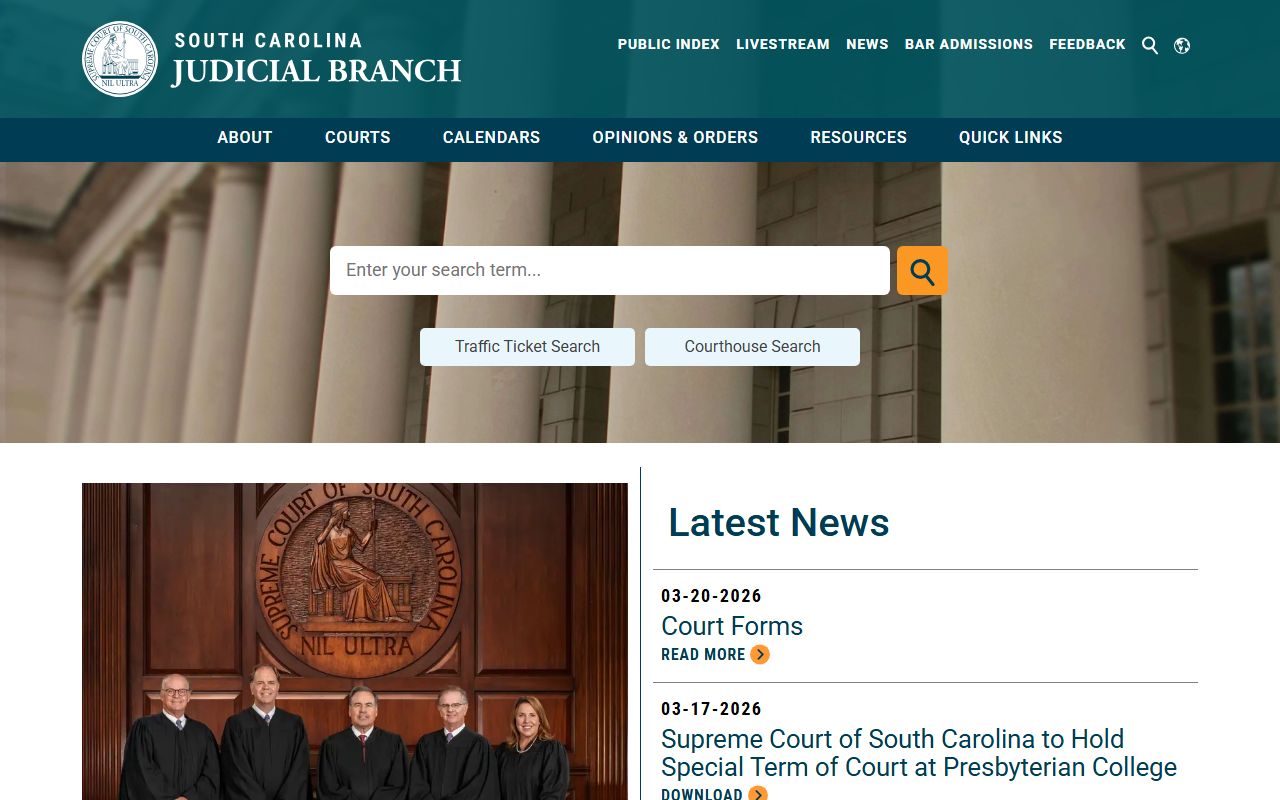
The site also provides access to court calendars, published opinions, and electronic filing resources for attorneys and people representing themselves in South Carolina traffic matters.
South Carolina Traffic Ticket Search Portal
The official ticket search tool lets you look up any citation issued in a South Carolina summary court. You can search three ways: by citation number, by driver's license number with a state selection, or by name combined with date of birth. Each method pulls up the same ticket data. The system shows the violation, fine amount, court location, and scheduled court date. It also lets you pay the ticket online using Visa, MasterCard, Discover, or American Express.
Go to sccourts.org/apps/traffic-ticket-search to begin. If your ticket does not appear, the issuing court may not participate in the online system, or the citation may not have been entered yet. Contact the court listed on your physical ticket for help in those cases. Most municipal courts participate, but coverage is not universal across South Carolina.
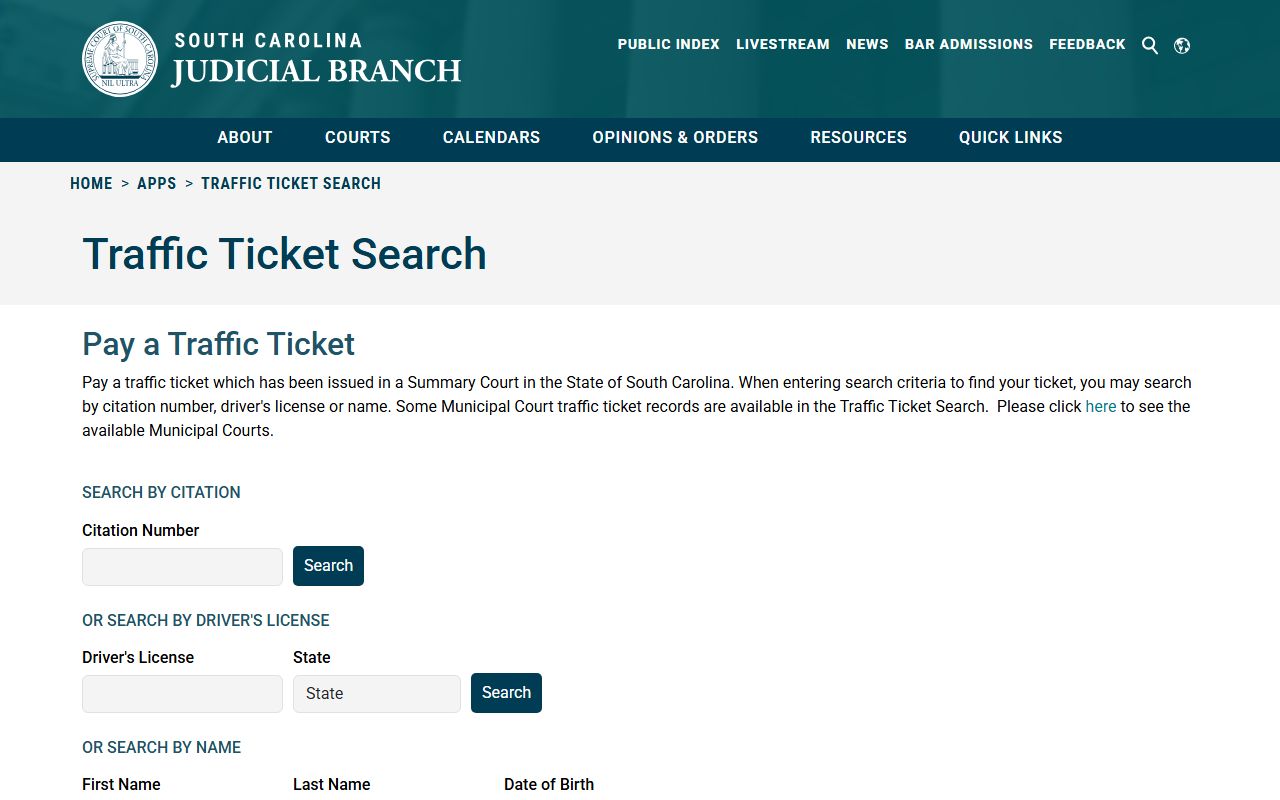
One important note: paying a ticket through this portal counts as a guilty plea. You waive your right to contest the charge in court. Under Section 56-5-6220, a guilty plea, nolo contendere plea, or bond forfeiture for a traffic violation carries the same legal weight as a conviction after trial. Points go on your record. That matters for insurance rates and future license status in South Carolina.
Note: Always verify the citation details match your ticket before paying online.
South Carolina Case Records Search
The Case Records Search at sccourts.org/case-records-search gives access to the public index for trial courts across the state. You can search by case number, party name, filing date range, case type, or action type. The traffic filter narrows results to traffic cases only. Some municipal court records are included, but you should check the list of participating courts before searching.
As of January 1, 2026, home address information no longer appears on the public index. This change applies to both new and existing cases. Your browser must support cookies and JavaScript for the search to work correctly. Some browsers also need pop-up exceptions enabled to view case detail pages. The index updates nightly, so records filed today may not show until the following business day in South Carolina.
South Carolina traffic case numbers follow a standard format. Summary court traffic cases often carry a citation number tied to the uniform traffic ticket. For appeals that reach Circuit Court, the format becomes YYYYCPXXXXXXX for civil matters or YYYYGSXXXXXXX for criminal proceedings. You can search by partial name using the percent sign (%) as a wildcard when you are unsure of the exact spelling.
Appellate Court Traffic Records in South Carolina
When a South Carolina traffic case is appealed beyond the circuit court level, it may reach the Court of Appeals or Supreme Court. Those records are searchable through C-Track, the appellate case management system. The public access site lets you look up cases by case number, party name, attorney name, or lower court case number.
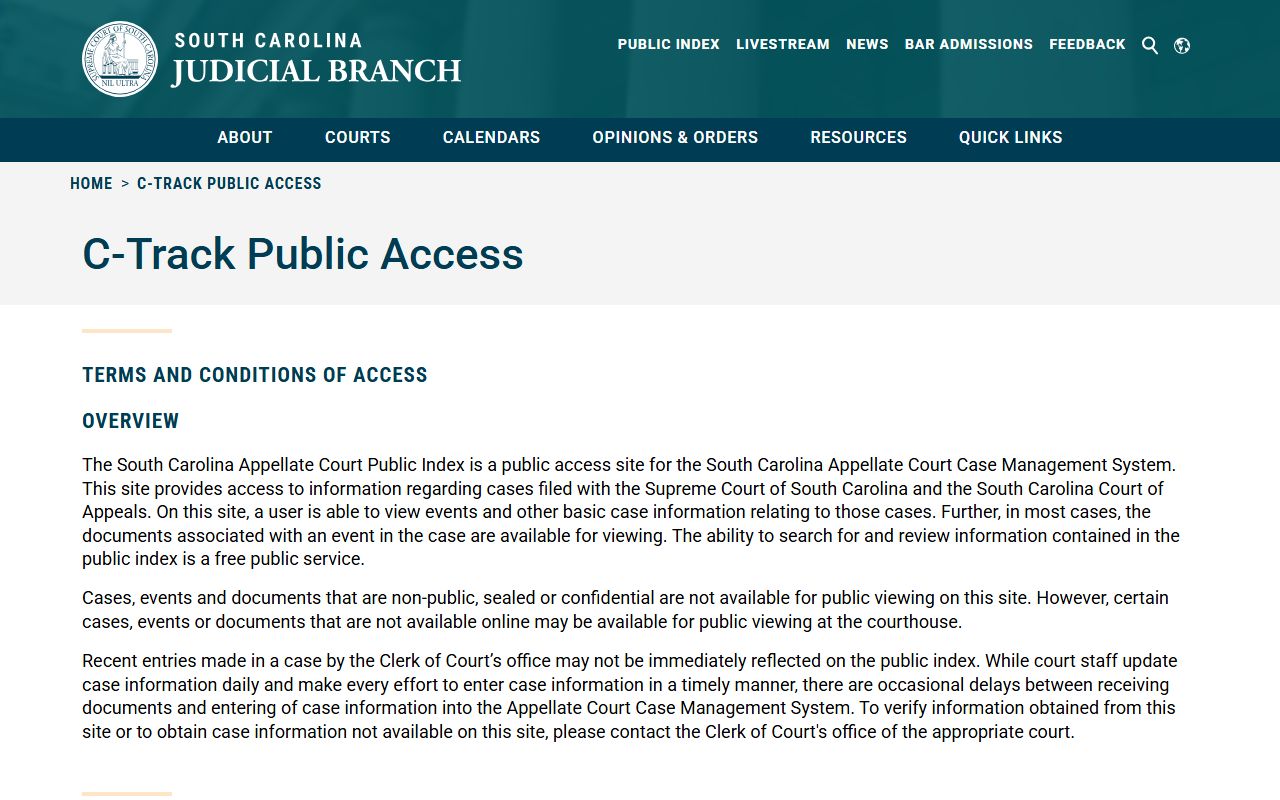
Visit sccourts.org/c-track-public-access to search appellate records. The system covers cases filed on or after May 1, 2012. Documents are available in PDF format and include briefs, motions, orders, and opinions. Sealed or confidential records are not visible to the public. Most traffic cases do not reach the appellate courts, but the tool is valuable for high-stakes DUI cases, license suspension appeals, and constitutional challenges to traffic enforcement in South Carolina.
South Carolina Traffic Court Records and the Points System
Every conviction in a South Carolina traffic court generates a record that feeds directly into the SCDMV points system. The purpose of the system is to identify problem drivers and protect other people on the road. When you are convicted of a traffic violation in South Carolina or any other state, that information is sent to the SCDMV and posted to your driving record.
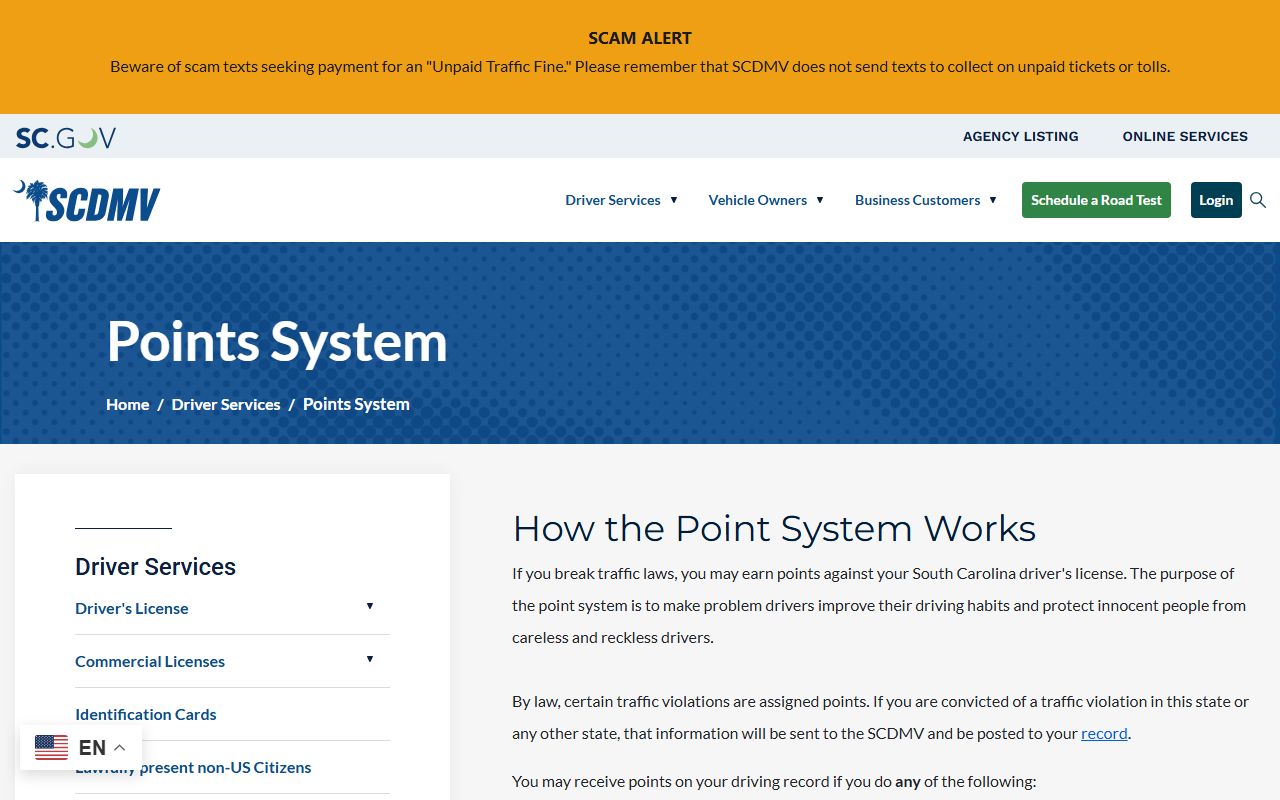
Point values are set by law and tied to specific violations. Six-point violations include reckless driving, passing a stopped school bus, hit-and-run involving property damage only, and speeding 25 or more miles per hour over the posted limit. Four-point violations include speeding between 10 and 25 mph over the limit, failing to yield right-of-way, following too closely, and improper lane changes. Two-point violations cover speeding less than 10 mph over, improper turns, and other minor driving errors. Details are available at dmv.sc.gov/driver-services/points-system.
Accumulating 12 or more points triggers automatic license suspension. The suspension period scales with the total: 12 to 15 points means 3 months; 16 to 17 points means 4 months; 18 to 19 points means 5 months; 20 or more points means 6 months. Points are cut in half after one year from the violation date on the ticket. They are removed entirely after two years from the violation date. Drivers with 6 or more points receive a warning letter from the SCDMV.
Note: Points from out-of-state convictions also count toward your South Carolina total.
Get Your South Carolina Driving Record
Your official driving record shows every traffic conviction, license suspension, accident report, and point accumulation tied to your license. It is the most direct way to see how your traffic court history affects your standing with the SCDMV. The record is also what insurance companies, employers, and courts look at when they need to verify your driving history.
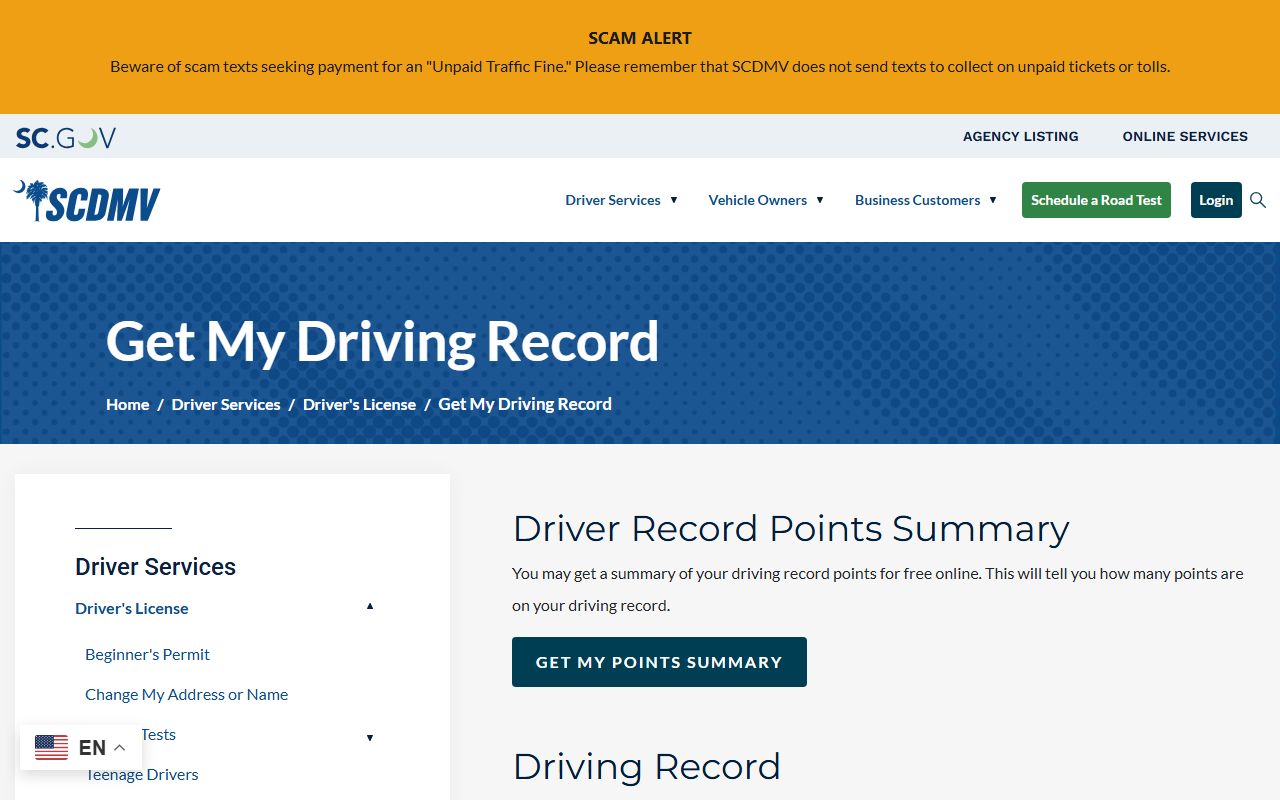
You can request a 3-year or 10-year driving record through dmv.sc.gov. Both cost $6. Online requests are available around the clock and can be printed immediately after payment. Mail requests use Form MV-70 and go to SCDMV Driver Records, P.O. Box 1498, Blythewood, SC 29016-0035 with a $6 check or money order. In-person requests are available at any SCDMV branch during regular business hours. Third-party requests require proof of a permissible purpose under the Driver's Privacy Protection Act.
The 3-year record covers recent violations and current license status. It works for most personal and employment uses. The 10-year record is needed for commercial driving, certain professional licenses, or employment that requires a longer history. Certified records include the SCDMV seal and are accepted for official purposes including court proceedings. A free point summary is also available online without ordering the full record.
SCDMV Forms for Traffic Court Records
Several forms connect directly to the traffic court record process in South Carolina. Form MV-70 is the main document for requesting driver records and driver information by mail. It asks for your name, date of birth, Social Security number, and current address. Part 3 of the form requires you to identify the permissible purpose under the Driver's Privacy Protection Act. One form is needed per driver if you are requesting records for multiple people.
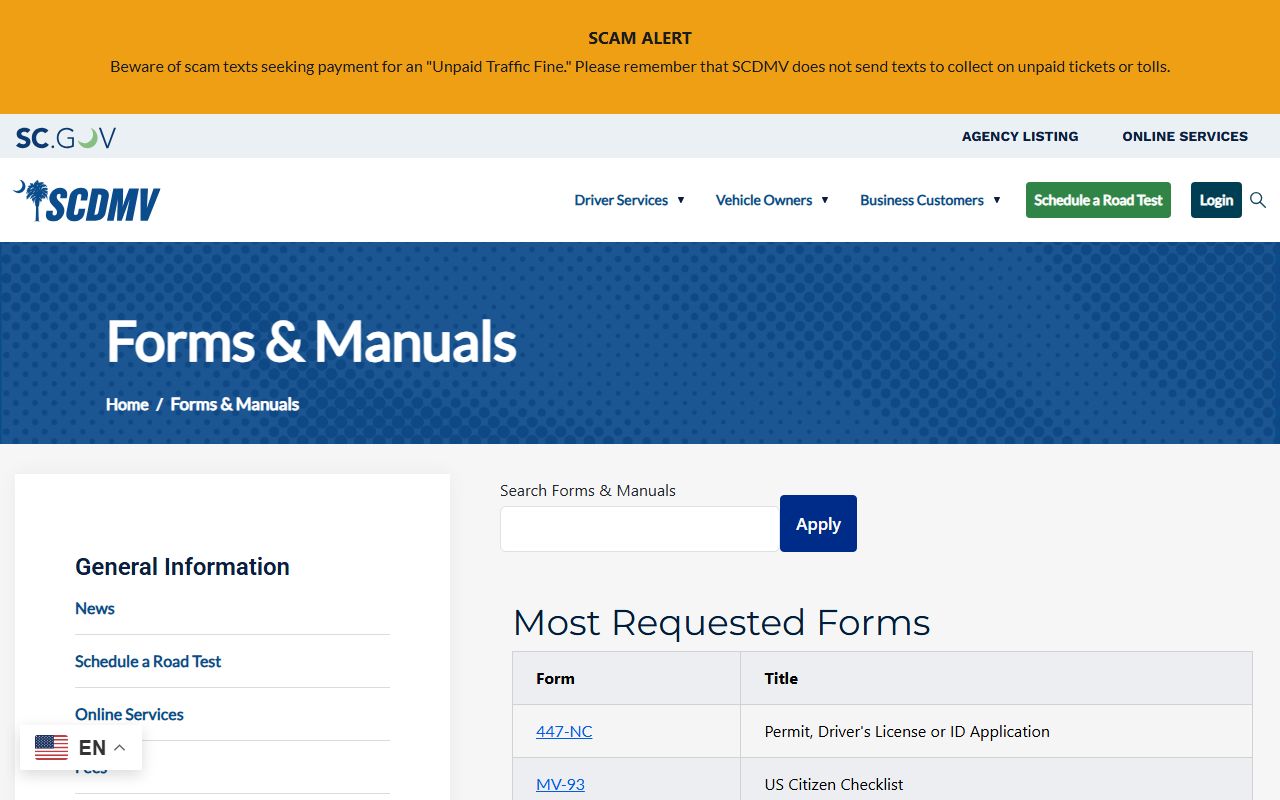
Form FR-50 is used for traffic collision reports. Form 5027-A handles vehicle and title information requests. All forms are available as free downloads at dmv.sc.gov/forms-and-manuals. The instruction sheet MV-70-IS explains how to complete the request form properly. If your payment is not included or your form is incomplete, the request will be returned without processing.
South Carolina Traffic Laws Behind the Records
South Carolina traffic court records are created when drivers violate the laws in Title 56 of the South Carolina Code. Understanding the law helps you understand what a traffic record actually shows. The most commonly cited chapter is Title 56, Chapter 5, the Uniform Act Regulating Traffic on Highways. This chapter covers speed limits, reckless driving, DUI, right-of-way rules, and dozens of other violations that appear in traffic case records every day.
Key provisions include Section 56-5-1520, which sets the maximum speed limit at 70 mph on interstates. Section 56-5-2920 defines reckless driving as operating a vehicle with willful or wanton disregard for the safety of persons or property. A reckless driving conviction carries 6 points, up to 30 days in jail, and a fine of $25 to $200. Section 56-5-2930 prohibits driving under the influence of alcohol or drugs. Section 56-5-2780 makes passing a stopped school bus a 6-point violation with fines starting at $500.
Section 56-5-750 makes it a separate offense to flee from law enforcement when signaled to stop. This is also the only traffic offense in South Carolina eligible for expungement under the intervention program statutes. Section 56-5-6230 requires all magistrate and municipal courts to notify the SCDMV when someone charged with a traffic violation pays a fine or forfeits bond. That notification creates the official conviction record tied to your license.
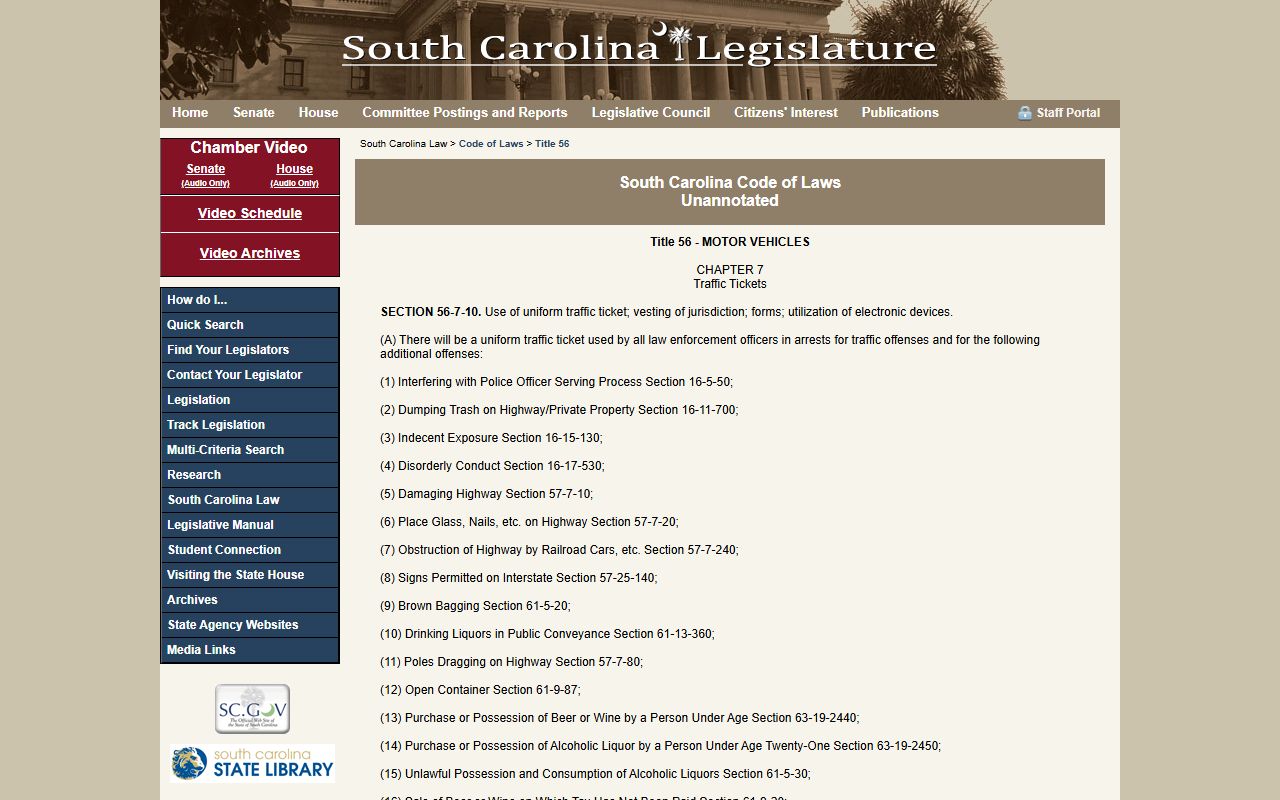
Title 56, Chapter 7 governs the uniform traffic ticket system used statewide. Under Section 56-7-10, every law enforcement officer in South Carolina uses the same standardized citation form. The ticket serves as both a citation and an arrest document. It has four copies: blue for the driver, green for the officer, white for enforcement records, and yellow for the SCDMV. Courts must set a court date at least ten business days from the violation date. Officers must report citations electronically to the DMV within 3 business days of issuance.
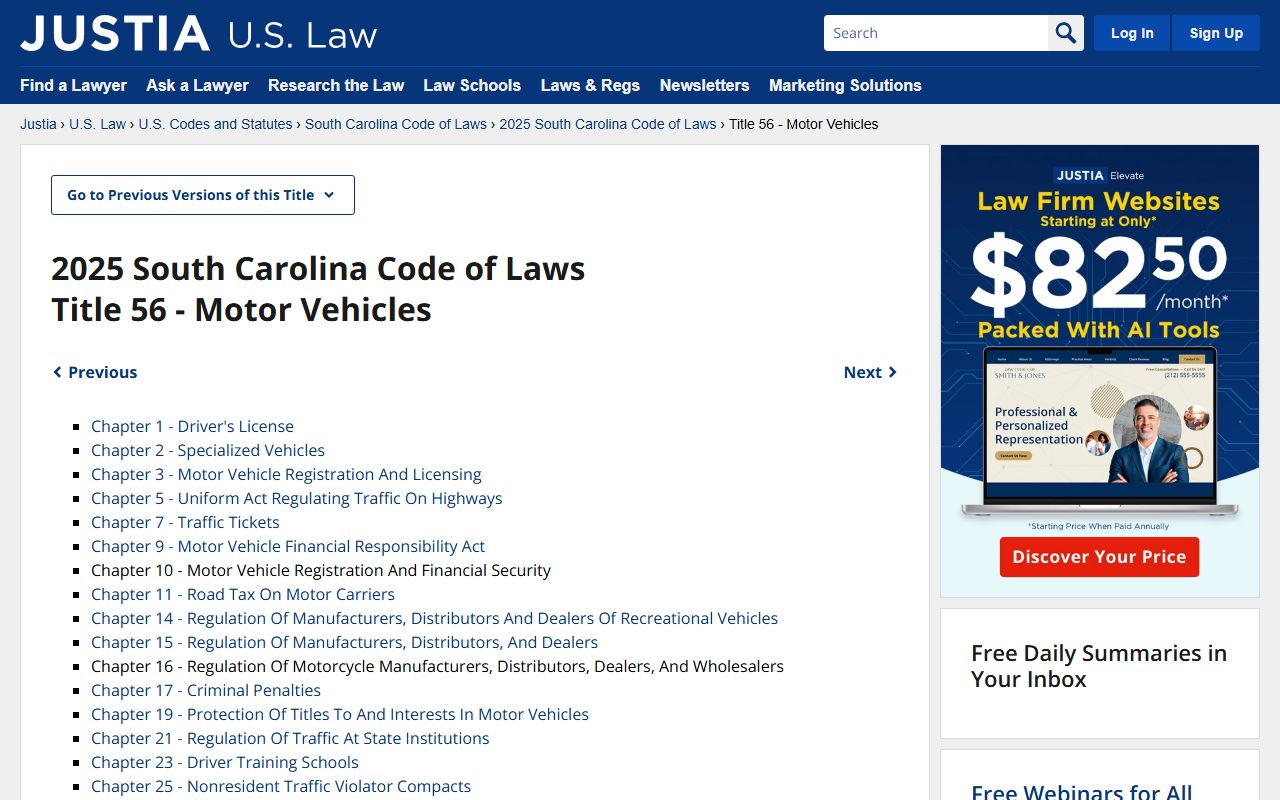
You can also review the full text of Title 56 through law.justia.com/codes/south-carolina/title-56, which provides a searchable, annotated version with links to each section and related court decisions. This is helpful when you need to understand what a specific charge on a traffic record actually means.
South Carolina Magistrate Courts and Traffic Cases
Magistrate courts handle the overwhelming majority of traffic cases in South Carolina. There are approximately 300 magistrates serving the state, each appointed by the Governor with advice and consent of the Senate for four-year terms. Each county has a chief magistrate appointed by the Chief Justice of the South Carolina Supreme Court. Magistrates must have a baccalaureate degree and pass a certification exam within one year of appointment.
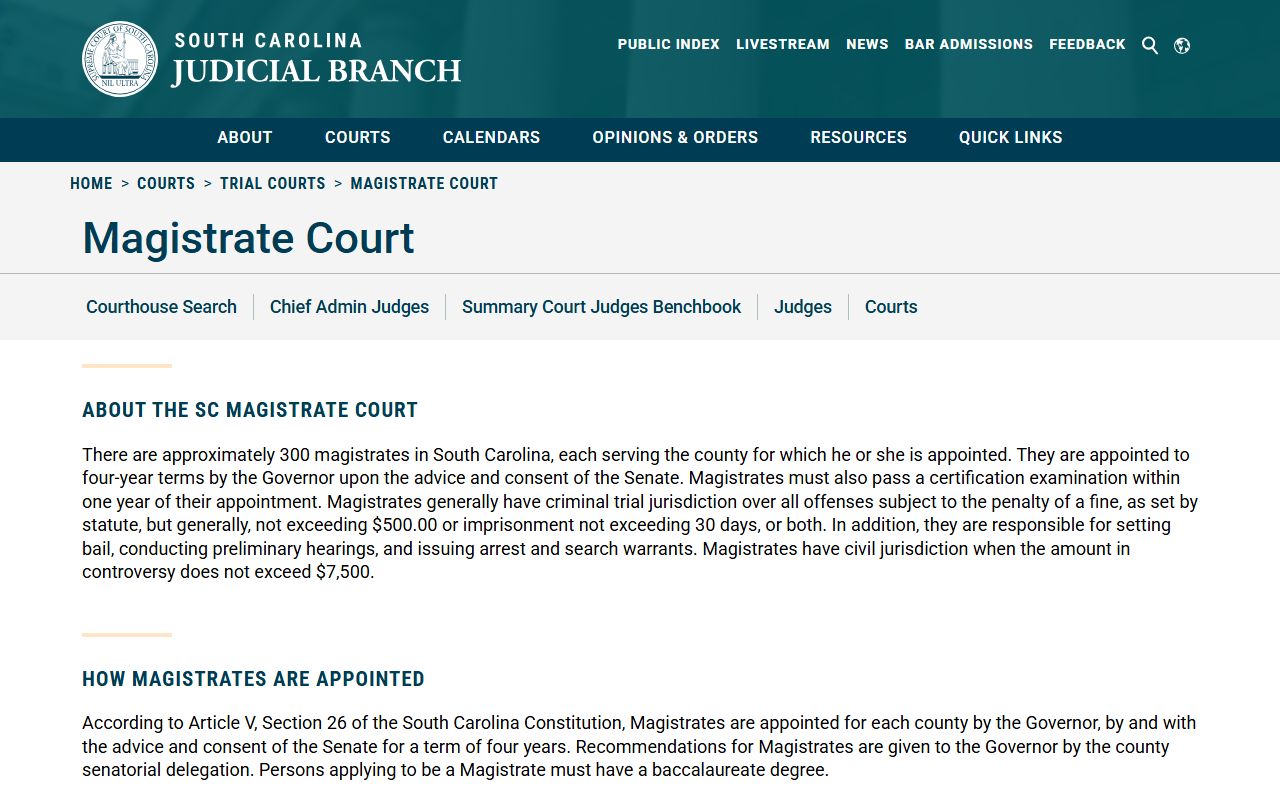
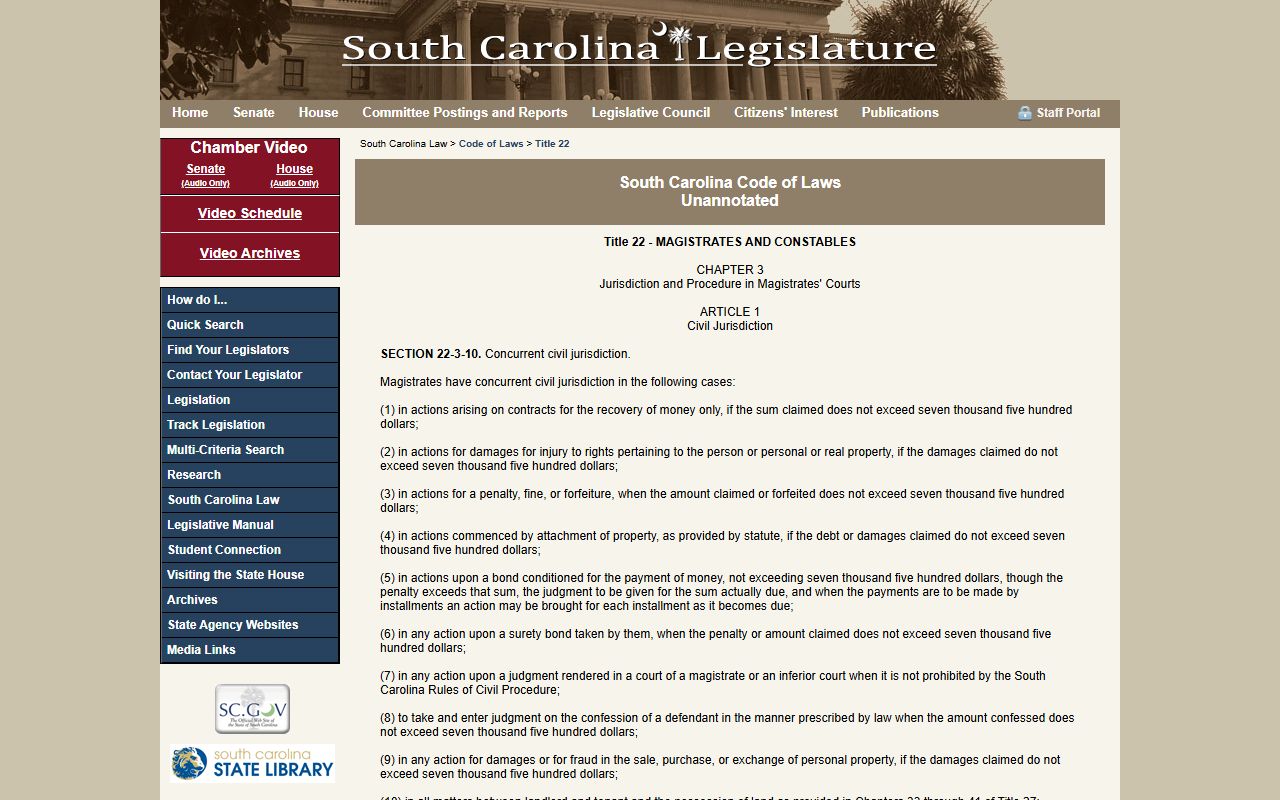
Under Section 22-3-550, magistrates have jurisdiction over offenses carrying a fine up to $500 or imprisonment up to 30 days, or both. Most routine traffic violations fall squarely within that range. Magistrate courts are not courts of record, meaning proceedings are not automatically transcribed. When a defendant appeals a magistrate court decision, the case goes to circuit court for a completely new trial (de novo). Learn more about magistrate courts at sccourts.org/courts/trial-courts/magistrate-court.
Defendants have the right to a jury trial in magistrate court upon request. Bond hearings happen twice daily at county detention centers in most jurisdictions. Under Section 17-15-230, magistrates must accept guaranteed arrest bond certificates issued by automobile clubs (up to $1,500) in lieu of cash bail for motor vehicle violations, except DUI charges. These bond procedures all generate records that appear in the traffic court system.
Court Costs on South Carolina Traffic Records
When you look at a traffic court record in South Carolina, the dollar amounts often look higher than the base fine. That is because of mandatory assessments added by state law. Under Sections 14-1-207 and 14-1-208, a 107.5 percent assessment applies to all fines imposed in magistrate and municipal courts. A $100 fine effectively becomes $207.50 before other surcharges are added.
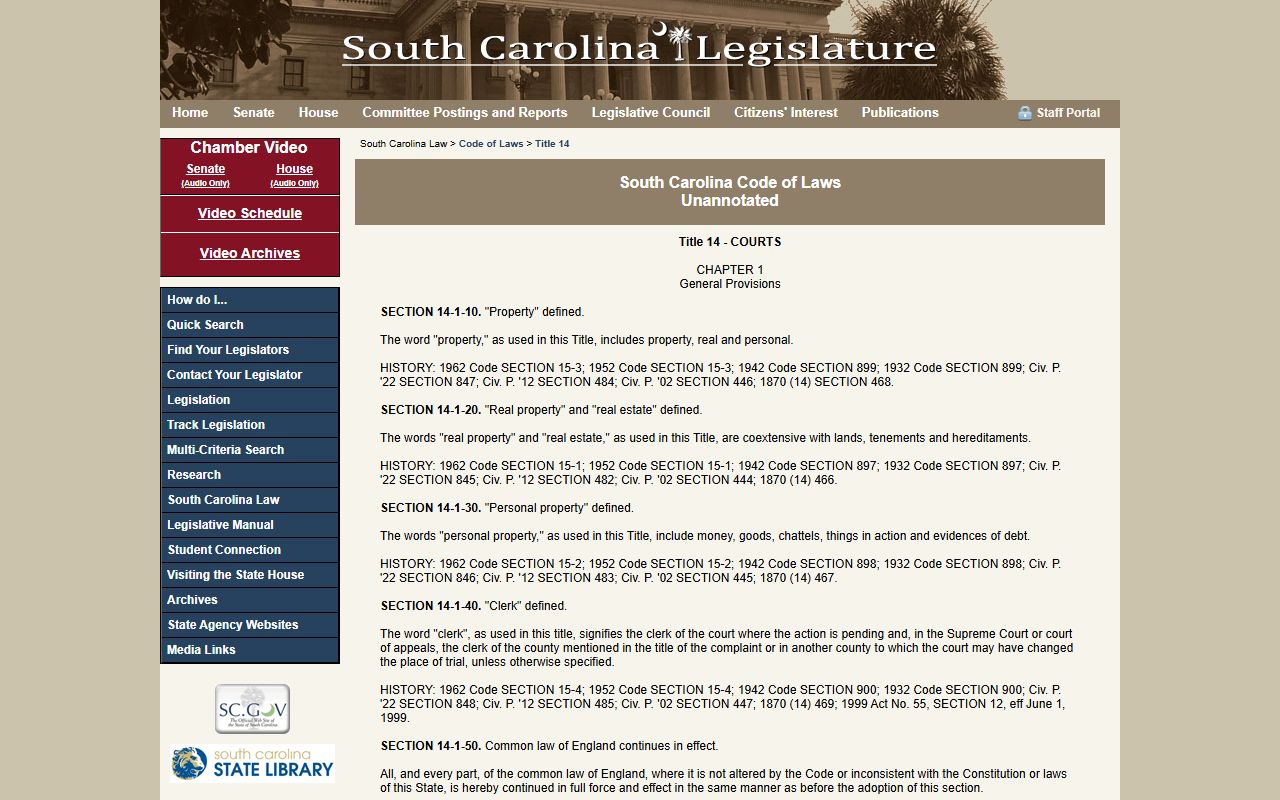
Section 14-1-240 adds a $5 Criminal Justice Academy surcharge on all traffic and ordinance violation cases in magistrate and municipal courts. A separate $25 surcharge applies to fines for misdemeanor traffic offenses under Section 14-1-212. These assessments cannot be waived, reduced, or suspended by the court. They are statutory requirements. Section 14-1-214 allows courts to accept credit and debit card payments, though processing fees may apply to offset administrative costs. The assessment revenue funds programs including victim services, officer training, and indigent defense.
Requesting South Carolina Traffic Court Records Under FOIA
Traffic court records in South Carolina are public documents. The South Carolina Freedom of Information Act at Title 30, Chapter 4 gives everyone the right to inspect, copy, or receive electronic copies of public records during normal business hours. You do not need to be a party to the case or provide a reason for your request. The law applies to all state agencies, counties, municipalities, and political subdivisions in South Carolina.
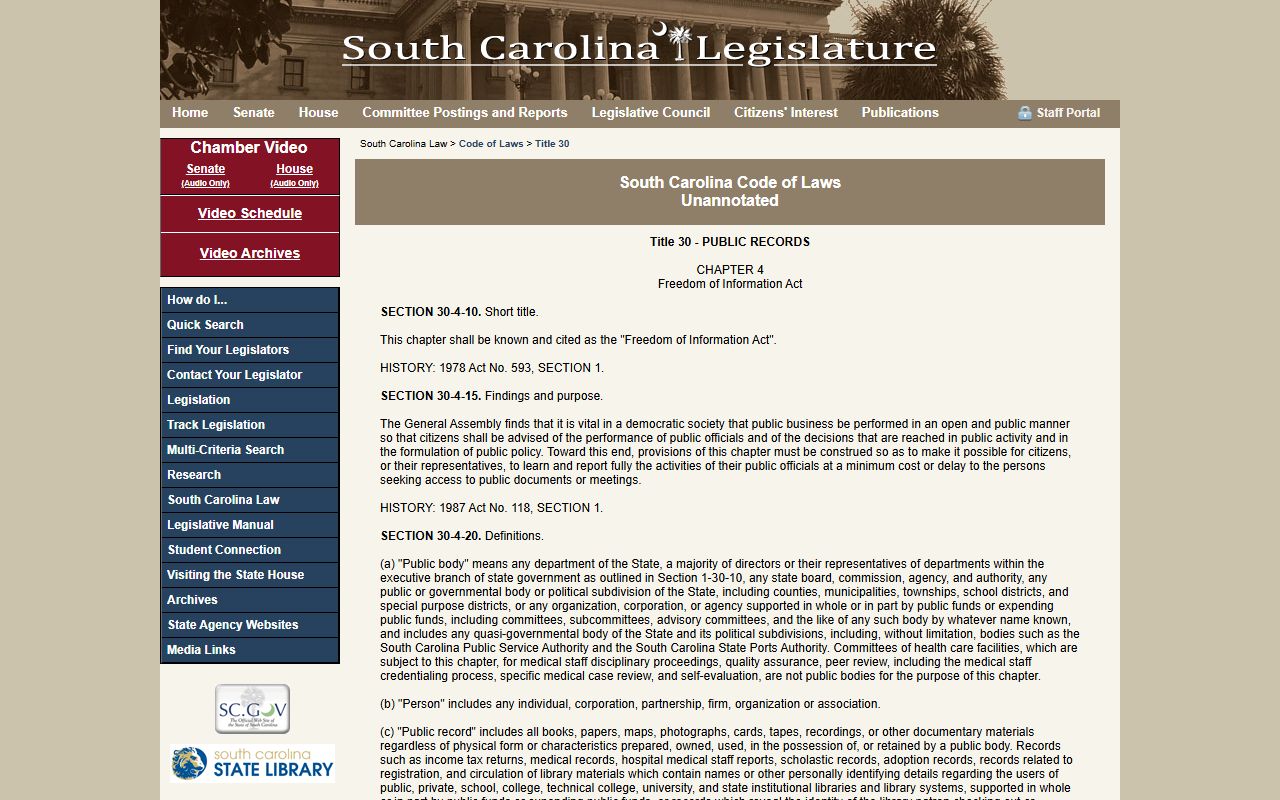
Under Section 30-4-30, a public body has 10 business days to respond to a request for records less than 2 years old. For records older than 2 years, the response window extends to 20 business days. Once a public body agrees to fulfill the request, it must produce the records within 30 calendar days. Agencies can charge fees for search, retrieval, and redaction, but those fees cannot exceed the prorated hourly salary of the lowest-paid employee with the skills to do the work. If a request is denied, the agency must cite the specific legal exemption justifying that denial.
Most routine traffic case records, fines, dispositions, and court dates are not exempt from disclosure. Certain personal information like Social Security numbers may be redacted, but the core record including the offense, charge, and disposition is publicly available. If a court denies your request, you can seek circuit court review under Section 30-4-110, and prevailing requesters may be awarded attorney's fees.
SCDPS Records and Accident Reports
The South Carolina Department of Public Safety maintains records of traffic collisions, citations, and other law enforcement activities. To request these records, you submit a FOIA request to SCDPS. Send your request by email to FOIA@SCDPS.GOV, by phone at (803) 896-7759, or by mail to SC Department of Public Safety, PO Box 1993, Blythewood, SC 29016.
SCDPS has 10 business days to respond to requests for records less than 2 years old. That extends to 20 business days for older records. Form FR-50 is used for accident report requests. Form MV-70 covers driver record and driver information requests. Copy fees are typically $0.25 per page for standard documents. Personal information like Social Security numbers and medical details is redacted from reports before release. Records related to active investigations may be withheld under exemptions, but resolved traffic case files are generally available.
Note: Certified accident reports must be specifically requested when submitting your FOIA form to SCDPS.
SCDMV Online Services for Traffic Records
The SCDMV online portal at scdmvonline.com provides several services that connect to traffic court records. You can request your driving record, renew vehicle registration, request duplicate titles, update your address, and check the status of your license or registration. The portal requires an account for certain transactions and accepts Visa, MasterCard, Discover, and American Express.
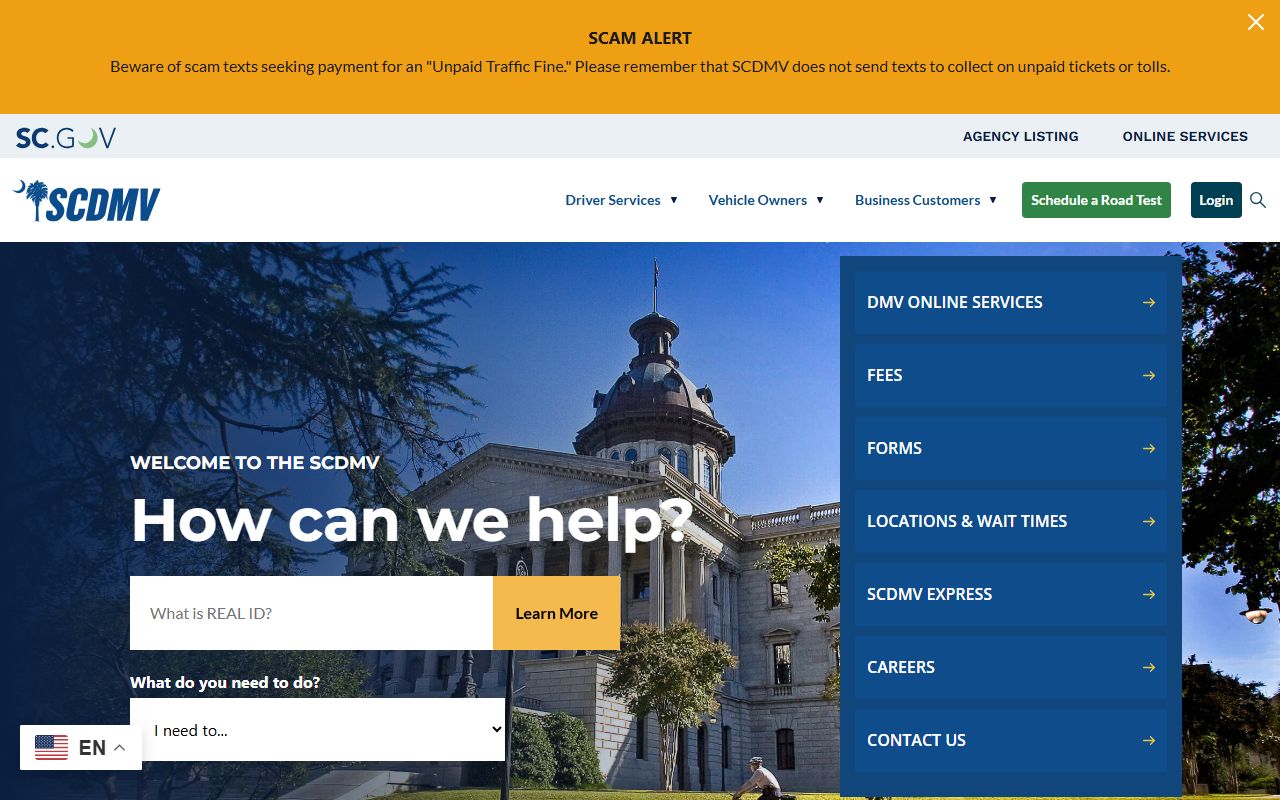
One free tool available through the SCDMV online system is the point summary check. This lets you see your current point total without paying the $6 fee for a full driving record. It is useful for checking your standing quickly after a recent conviction appears on your record. A SCDMV Mobile Services program also operates across the state, bringing services like REAL ID to various locations for drivers who cannot easily reach a branch office.
South Carolina CDR Traffic Offense Codes
Court Disposition Reporting codes identify specific offenses in South Carolina court records, police reports, and criminal history files. If you see a number code on a traffic record and want to know what charge it represents, use the CDR code search at sccourts.org/cdr/displayCDRcode.cfm. You can search by code number, statute number, or keyword.
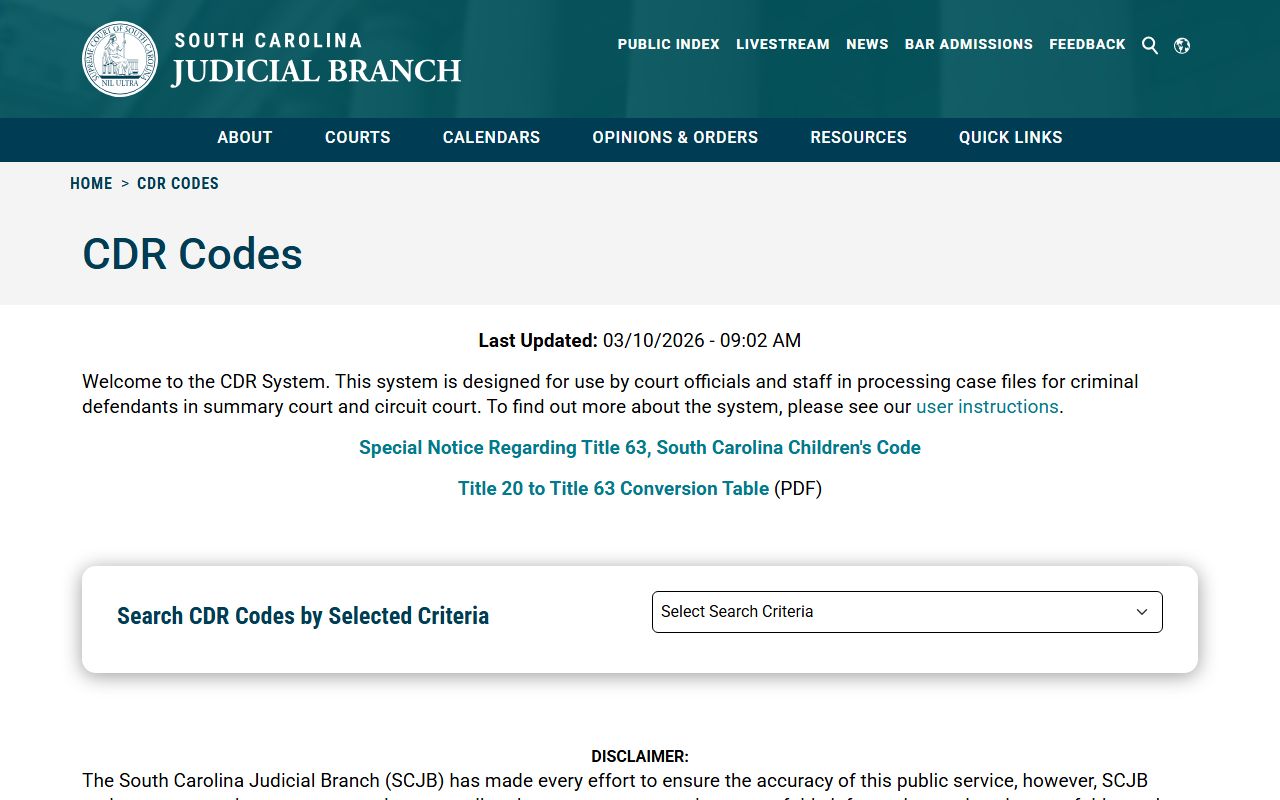
Traffic offense codes generally fall in the 600 to 699 range. Code 657 represents Reckless Driving under statute 56-05-2920. Code 625 represents Driving Under the Influence under statute 56-05-2930. Each CDR entry lists the offense description, applicable statute, offense type (felony or misdemeanor), and effective date. Courts use these codes to report dispositions to the South Carolina Law Enforcement Division (SLED). CDR codes also appear on sentencing sheets and criminal history records tied to traffic convictions. The full list can be downloaded as a comma-delimited file from the search page.
Note: The South Carolina Code of Laws is the controlling authority for offense definitions and penalties. CDR codes are a reference tool, not the legal text itself.
Traffic Education Program and Bail Procedures
South Carolina offers an alternative to a traffic conviction for eligible first-time offenders. The Traffic Education Program under Title 17, Chapter 22 is available for violations punishable only by fine with 4 points or fewer on the license. A person can participate only once in their lifetime. Successful completion results in a noncriminal disposition with no conviction record for the offense.
The program charges a non-refundable application fee of $140 plus a participation fee up to $140. Fees may be waived for people who qualify as indigent. If the participant receives another traffic violation within six months of entering the program, they are terminated and the original charge proceeds normally. The Traffic Education Program is different from standard traffic school, which reduces points by up to 4 once every three years without dismissing the underlying charge.
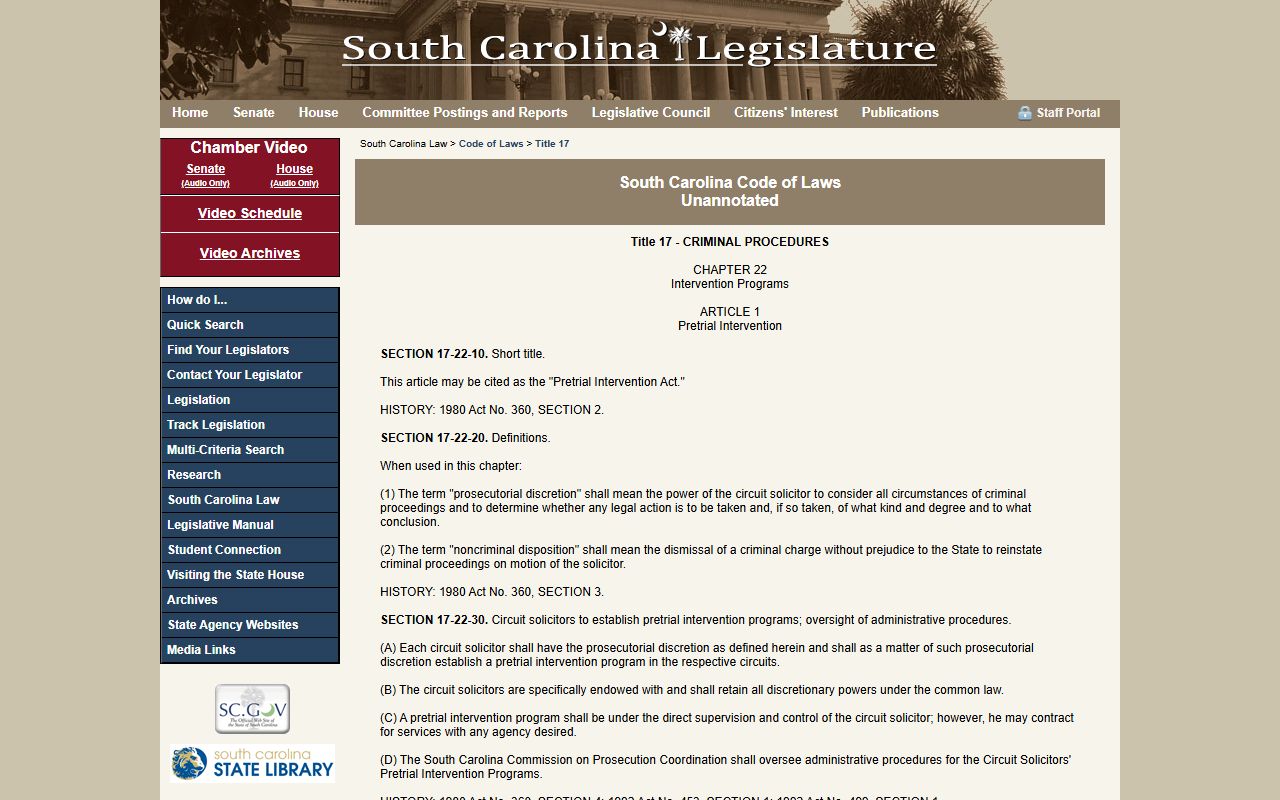
Bail procedures under Title 17, Chapter 15 also create records in traffic cases. Bond hearings must occur within 24 hours of arrest. Defendants can deposit 10 percent of the bond amount with the clerk as an alternative to a surety bond. For motor vehicle violations other than DUI, magistrates must accept guaranteed arrest bond certificates from automobile clubs worth up to $1,500. If a defendant fails to appear, bond forfeiture proceedings begin. Under the statute, bond forfeiture is treated as equivalent to a conviction for points and penalty purposes.
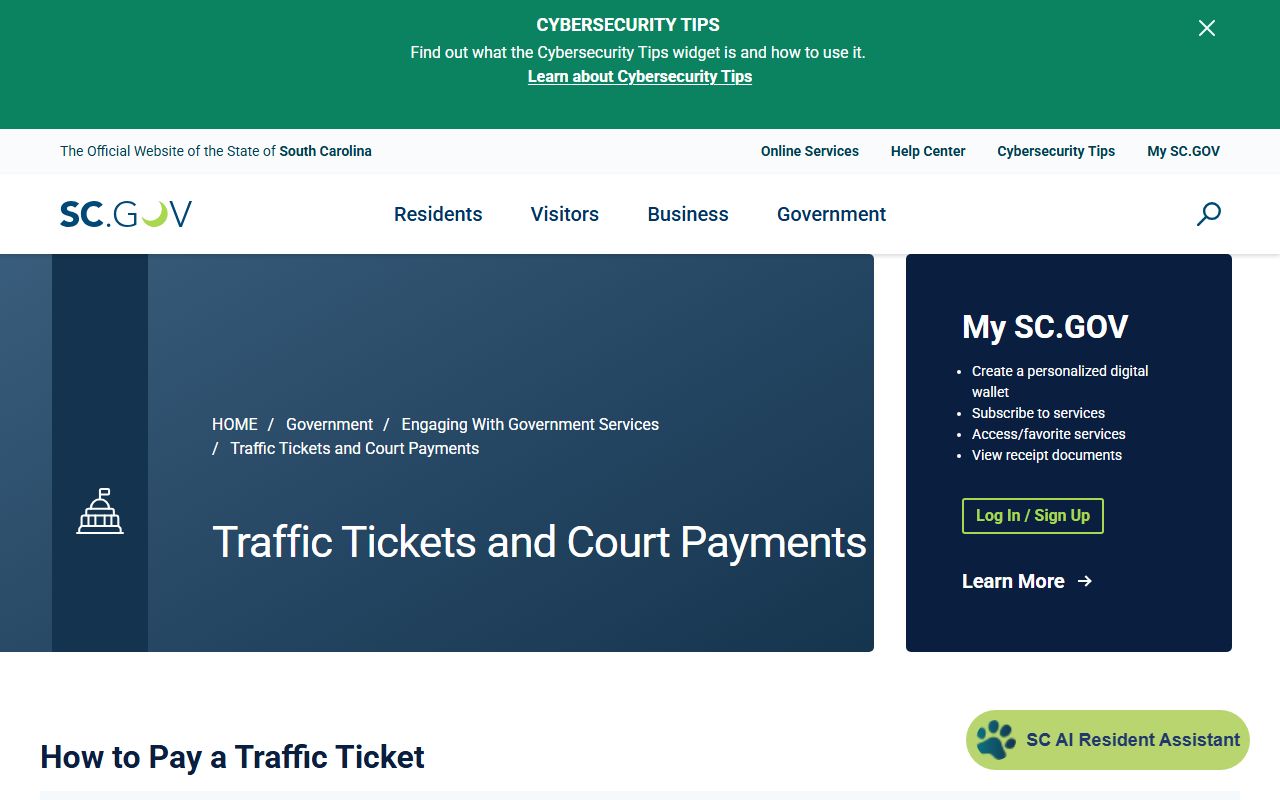
The SC.GOV portal at sc.gov/government/engaging-government-services/traffic-tickets-and-court-payments allows online payment for most South Carolina counties and municipalities. The process involves four steps: select county, enter ticket or case number, proceed to payment, and complete with a credit or debit card. Pay at least 48 hours before your court date to allow time for the payment to post. Payment online constitutes a guilty plea and waiver of contest rights, and it does not automatically reinstate a suspended license. A Notice of Withdrawal of Suspension must also be processed by the court and received by the SCDMV before reinstatement occurs.
The Justia resource at law.justia.com/codes/south-carolina/title-56 provides an annotated and searchable version of the full motor vehicle title. It includes annotations from court decisions and links between related code sections. This is a useful complement to the official statehouse text when researching the legal basis for a traffic charge that appears in a South Carolina court record.
Browse South Carolina Traffic Court Records by County
Each of South Carolina's 46 counties operates its own magistrate court system. Traffic cases are filed, heard, and resolved at the county level. Select a county below to find local traffic court resources, magistrate contact information, and records specific to that area.
Traffic Court Records in Major South Carolina Cities
Major cities in South Carolina may operate their own municipal courts in addition to the county magistrate system. Municipal courts handle ordinance violations and traffic offenses within city limits. Select a city below to find traffic court resources for that location.